
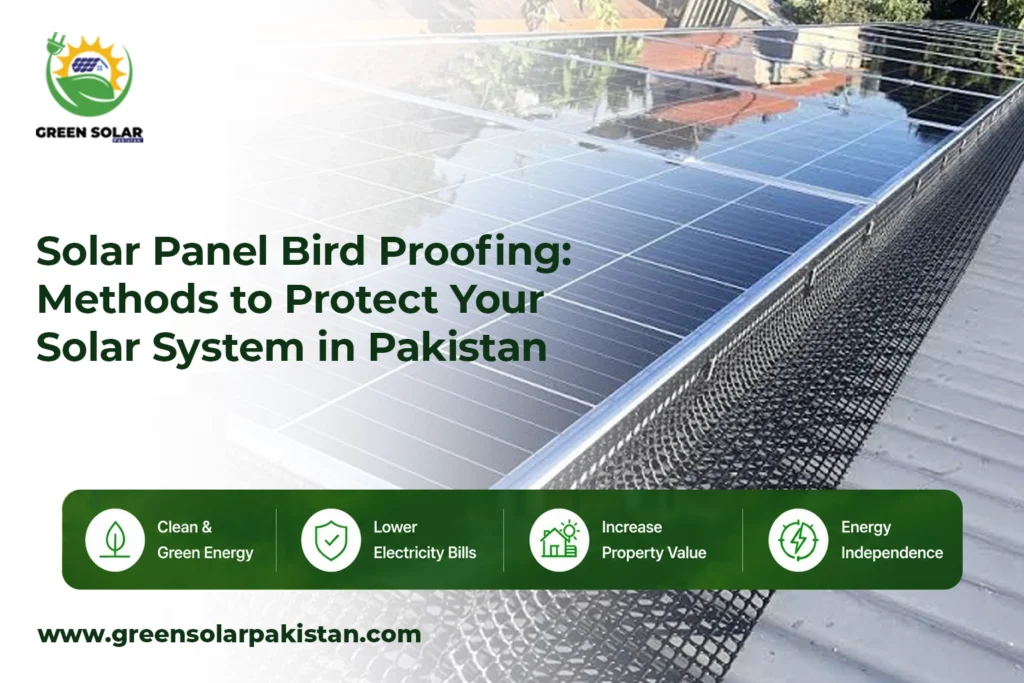
Birds nesting under solar panels can create maintenance problems for homeowners and businesses, from accumulated droppings and nesting debris to blocked drainage and difficult cleaning. Solar Panel bird proofing offers a practical way to reduce these risks. With suitable mesh barriers, careful installation, and regular inspections, property owners can protect their solar equipment while allowing birds to move away safely. Bird proofing solar panels is particularly useful in Pakistan, where rooftop solar installations are exposed to dust, heat, and seasonal weather conditions that can make maintenance more demanding.
For long-term protection, the goal is to prevent birds from accessing the space beneath solar panels without damaging the panels, wiring, mounting structure, or roof.
What Is Solar Panel Bird Proofing?
Solar panel bird proofing is the process of preventing birds from nesting or sheltering in the open space beneath rooftop solar modules. Installers generally use specially designed mesh barriers around the panel perimeter to close access points while maintaining appropriate ventilation.
Birds, including pigeons and sparrows, may find the sheltered area beneath solar panels suitable for nesting. Once nesting materials and droppings accumulate, cleaning can become more difficult, particularly on rooftops where panels are installed close together.
A properly installed bird-proofing system helps prevent birds from entering this area. It can also reduce the amount of nesting debris that collects near cables, mounting rails, and roof drainage points.
For Pakistani properties with residential, commercial, or industrial solar installations, bird protection can form part of a broader solar maintenance plan.
Why Do Birds Nest Under Solar Panels?
Solar panels create a covered space that can attract birds looking for shelter. Several factors make this location appealing.
Protection from Sunlight and Weather
The gap between a solar panel and the roof provides shade during hot weather and shelter from rain. These conditions can make the space attractive for nesting, especially during breeding seasons.
Convenient Nesting Locations
Solar mounting rails, roof edges, and nearby structures may provide suitable places for birds to build nests. Once nesting material accumulates, birds may repeatedly return to the same location.
Limited Human Disturbance
Birds may find it easier to settle beneath panels on rooftops that are rarely accessed. Properties with large solar arrays can provide multiple sheltered spaces.
Nearby Food and Water
Residential neighborhoods, restaurants, warehouses, and commercial areas may provide birds with accessible food and water. Solar installations in these locations can consequently experience recurring bird activity.
Understanding these causes helps property owners choose an appropriate bird-proofing method rather than relying on temporary deterrents alone.
Common Problems Caused by Birds Under Solar Panels
Bird activity does not automatically mean a solar system is damaged. However, prolonged nesting and the accumulation of waste can create several maintenance concerns.
Droppings and Surface Contamination
Bird droppings can accumulate on the upper surface of solar modules and reduce the light reaching the cells when coverage is significant. The effect varies with the amount and location of contamination, so production losses should not be assumed without inspection.
Droppings on roofs and mounting structures can also make cleaning more difficult. Regular inspection helps identify when professional cleaning is necessary.
Nesting Materials and Debris
Twigs, feathers, leaves, and other materials can accumulate beneath panels. This debris can complicate maintenance and may obstruct roof drainage if it moves into gutters or outlets.
Potential Wiring Problems
Birds nesting around cables may create additional inspection requirements. Damaged cable insulation, loose connectors, and exposed electrical components can present electrical hazards. Bird activity should not be assumed to cause wiring damage in every installation, but any visible damage should be assessed by a qualified solar technician.
Repeated Cleaning Requirements
When birds continue nesting in the same area, property owners may need more frequent inspections and cleaning. Installing a suitable physical barrier can help reduce repeated access to the space beneath panels.
Best Solar Panel Bird Proofing Methods
The right method depends on the solar mounting design, roof layout, level of bird activity, and condition of the existing installation.
-
Solar Panel Bird Mesh
Bird mesh is one of the most practical physical barriers for rooftop solar systems. It is fitted around the accessible perimeter of the array to prevent birds from entering the space underneath.
Suitable mesh should be designed for outdoor exposure and compatible with the panel mounting structure. Corrosion-resistant metal mesh or purpose-made solar bird-proofing products may be appropriate, depending on the installation.
A good installation should:
- Close gaps through which birds could enter.
- Avoid drilling into solar panels or compromising their frames.
- Keep electrical cables free from pressure and abrasion.
- Preserve suitable airflow beneath the modules.
- Avoid obstructing drainage or creating sharp exposed edges.
- Allow technicians to access equipment when maintenance is required.
Mesh should be selected for the actual installation rather than chosen solely because it is inexpensive.
-
Purpose-Made Solar Bird Barriers
Purpose-made barriers are designed for use around solar panel edges. Some systems use clips or fastening mechanisms compatible with the panel frame and mounting arrangement.
These products can offer a more controlled fit than improvised barriers. However, compatibility matters: a fastening method that works with one mounting system may not be suitable for another.
Before installation, the technician should check the panel manufacturer’s requirements and confirm that the barrier will not interfere with the module frame, wiring, or mounting hardware.
-
Humane Bird Deterrents
Visual deterrents and other bird-management products may help in certain locations, but results vary according to the bird species and surrounding environment.
Deterrents should be selected carefully and used in combination with physical exclusion when appropriate. Products that trap, injure, or poison birds should be avoided.
If birds are already nesting beneath panels, the nest should be checked before any exclusion work begins. Active nests may be protected by applicable wildlife laws, and removing them without checking local requirements may be inappropriate.
Bird Proofing Solar Panels: A Safe Installation Process
A professional installation begins with inspection rather than immediately attaching mesh.
Step 1: Inspect the Solar Array
The technician examines the panel perimeter, mounting rails, cable routes, roof condition, and visible nesting activity. This assessment helps identify access points and any existing maintenance problems.
Step 2: Check for Existing Nests
Before closing gaps, the installer checks whether birds or chicks are present. Work should be planned to avoid trapping wildlife inside the enclosed space.
Step 3: Select Compatible Materials
Mesh size, material, clips, and fastening arrangements should suit the installation. Materials must tolerate outdoor conditions, including heat, moisture, dust, and corrosion exposure.
Step 4: Install the Perimeter Barrier
The mesh is secured around the appropriate panel edges without drilling into the modules or placing pressure on electrical cables. The barrier should be firm enough to resist movement but should not compromise the solar mounting system.
Step 5: Inspect the Completed Work
The installer checks for remaining access gaps, loose sections, sharp edges, and interference with drainage or ventilation. Any visible cable damage or other electrical concern should be referred to a qualified technician.
Step 6: Arrange Periodic Checks
After installation, periodic inspections help identify loose clips, corrosion, accumulated debris, and other maintenance needs. Inspection frequency depends on local conditions and the product manufacturer’s recommendations.
Solar Panel Bird Proofing Cost in Pakistan
The cost of bird-proofing a solar system in Pakistan depends on the size of the installation and the materials required. There is no single price that applies to every rooftop.
Factors affecting the total cost include:
- Solar array size: Larger installations usually require more perimeter coverage and materials.
- Mesh quality: Material, corrosion resistance, durability, and product design affect the price.
- Roof accessibility: Difficult-to-reach rooftops may require additional labor and safety equipment.
- Installation complexity: Irregular panel layouts and existing obstructions can increase installation time.
- Cleaning requirements: Existing nests and debris may require separate cleaning or inspection work.
- Local service charges: Labor rates and travel costs vary by city and service provider.
For an accurate quotation, ask the installer to inspect the array and specify the mesh material, fastening method, perimeter coverage, labor, and any additional cleaning charges.
Avoid choosing a service based only on the lowest quoted price. Poorly secured mesh can leave gaps, while unsuitable fasteners can damage panel frames or interfere with maintenance.
How to Choose a Solar Panel Bird Proofing Service
Selecting a competent installer is important because bird protection must work alongside the existing solar system rather than interfere with it.
Experience With Rooftop Solar Systems
Look for a provider familiar with solar mounting structures, electrical safety, roof access, and the requirements of different panel layouts.
Appropriate Materials
Ask which mesh and fastening system will be used. The provider should explain how the materials resist corrosion and outdoor exposure and how they will be attached without damaging the modules.
Safe and Humane Practices
A responsible service provider checks for active nests before closing access points and avoids methods that could injure birds.
Clear Scope of Work
A written quotation should explain the coverage area, materials, installation procedure, cleaning requirements, and warranty terms, if offered.
After-Installation Support
Ask whether the provider offers follow-up inspections or repairs if mesh becomes loose. Maintenance arrangements can help protect the long-term effectiveness of the installation.
Maintaining Solar Panels After Bird Proofing
Bird proofing reduces access to the area beneath solar panels, but it does not eliminate every maintenance requirement.
Inspect the system periodically for loose mesh, visible nesting material, droppings, damaged cables, and debris around roof drainage points. The frequency of inspection should reflect the site’s conditions and the manufacturer’s recommendations.
Solar panels should also be cleaned when necessary, following the panel manufacturer’s instructions. Avoid abrasive brushes, harsh chemicals, unsafe rooftop access, or cleaning methods that could damage the glass or electrical equipment.
If you notice loose wiring, exposed conductors, damaged connectors, or other electrical concerns, do not attempt repairs while the system is energized. Contact a qualified solar professional.
After severe weather or any work on the rooftop, a visual inspection can help identify damage or movement. Monitoring system output may also help identify unusual changes, although a drop in production can have several causes beyond bird activity.
Is Solar Panel Bird Proofing Worth It?
For properties experiencing repeated nesting beneath solar panels, bird proofing can be a practical preventive measure. It helps restrict access to sheltered spaces, reduces nesting-related debris, and can make routine maintenance easier.
Its value depends on the installation, the severity of bird activity, and the cost of recurring cleaning or repairs. A property with little bird activity may not require the same level of protection as a large rooftop array where birds repeatedly nest.
Before investing, compare the cost of a suitable barrier with the maintenance problems it is intended to reduce. A site inspection can help determine whether mesh, another humane exclusion method, or routine monitoring is the most appropriate solution.
Conclusion
Solar Panel Bird proofing is a useful consideration for homeowners and businesses in Pakistan that experience repeated bird nesting beneath rooftop solar modules. Properly selected mesh barriers, careful installation, humane wildlife handling, and routine inspections can help reduce nesting problems without compromising the solar equipment.
The best approach is to inspect the system first, choose compatible materials, and use an installer who understands rooftop solar safety. With the right preventive measures, property owners can keep their solar installations easier to maintain while protecting both their equipment and local wildlife.
Frequently Asked Questions (FAQs)
Q1. What is Solar Panel Bird Proofing?
Solar panel bird proofing involves installing suitable barriers, commonly mesh, around solar panel edges to prevent birds from nesting beneath the modules.
Q2. Does bird mesh affect solar panel performance?
Properly installed mesh around the panel perimeter should not cover the active solar surface. It must be fitted without obstructing ventilation, drainage, wiring, or mounting components.
Q3. What is the best bird deterrent for solar panels?
For birds nesting underneath panels, a compatible physical mesh barrier is often a practical option. Other deterrents may help in particular situations, but their effectiveness varies.
Q4. How much does solar panel bird proofing cost in Pakistan?
The cost depends on array size, mesh quality, roof accessibility, labor, and any cleaning required. Request a site-specific quotation for an accurate estimate.
Q5. Can I install solar panel bird mesh myself?
Some installations may appear straightforward, but rooftop falls, electrical hazards, and the risk of damaging panels make professional installation advisable, especially for large or difficult-to-access systems.
Q6. Does bird proofing eliminate all solar panel maintenance?
No. Bird proofing can reduce nesting beneath panels, but the system still requires appropriate inspections, cleaning when necessary, and checks for weather damage, loose components, and electrical issues.